
The structure of the Framework and how to use it
Pillars of Practice
The structure of the Development Framework for Vaccinators is aligned with the NMAHP Development Framework. It demonstrates the knowledge and skills required by practitioners working in the Scottish Vaccination and Immunisation Programme across four pillars of practice.
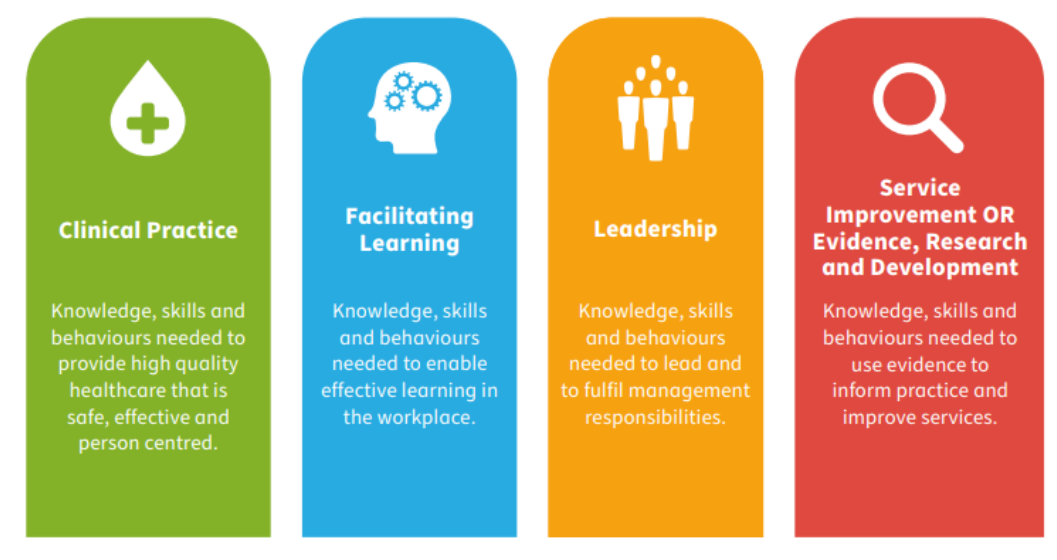
The Evidence, Research and Development pillar is referred to as Service Improvement for HCSWs. Further explanation of the pillars of practice is available within the NMAHP Development Framework.
Levels of Practice
This framework describes the differences in roles of the healthcare practitioner and the learning required for the different career levels. These levels are described in detail in the Career Framework for Health which reflects role development and progression and in the career development pathways model set out in the Transforming Roles programme.
HCSWs usually practice within level 2 to 4 of the development framework. NMAHP registrants usually practice through levels 5 to 8.
While career levels are often the same as the Agenda for Change (AfC) pay bands, this is not always the case. Those who need more help to determine which level they should focus on, should speak to their manager or educator.
The following demonstrates how moving through the levels is associated with increasing knowledge, clinical expertise, responsibility and experience. The knowledge and skills of each level of practice builds on the level before. Further explanation of the levels of practice is available within the NMAHP development framework and in the image below.
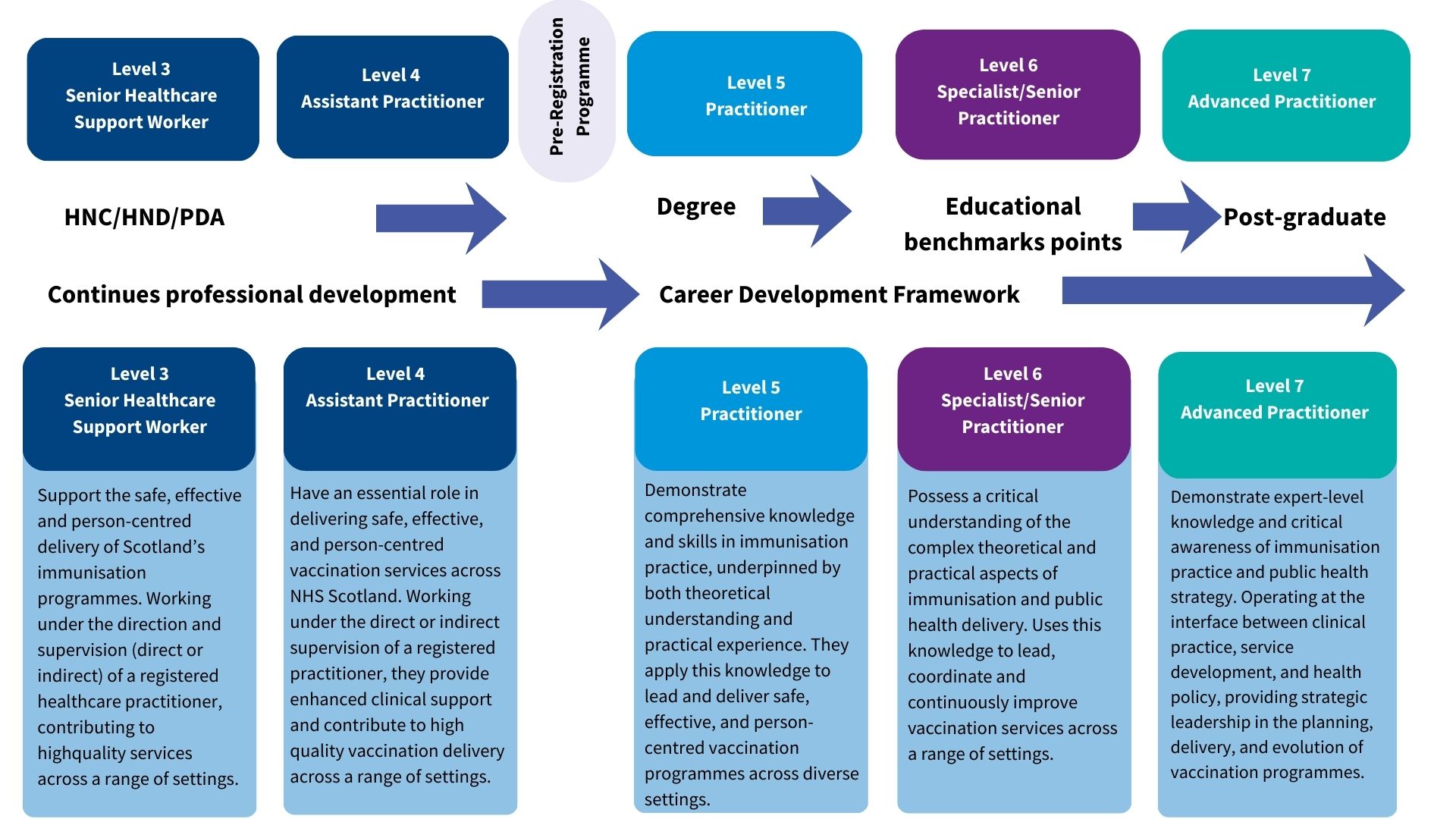
This framework focuses on career levels 3 to 7 as described in the Career Framework for Health.
How to use the Framework
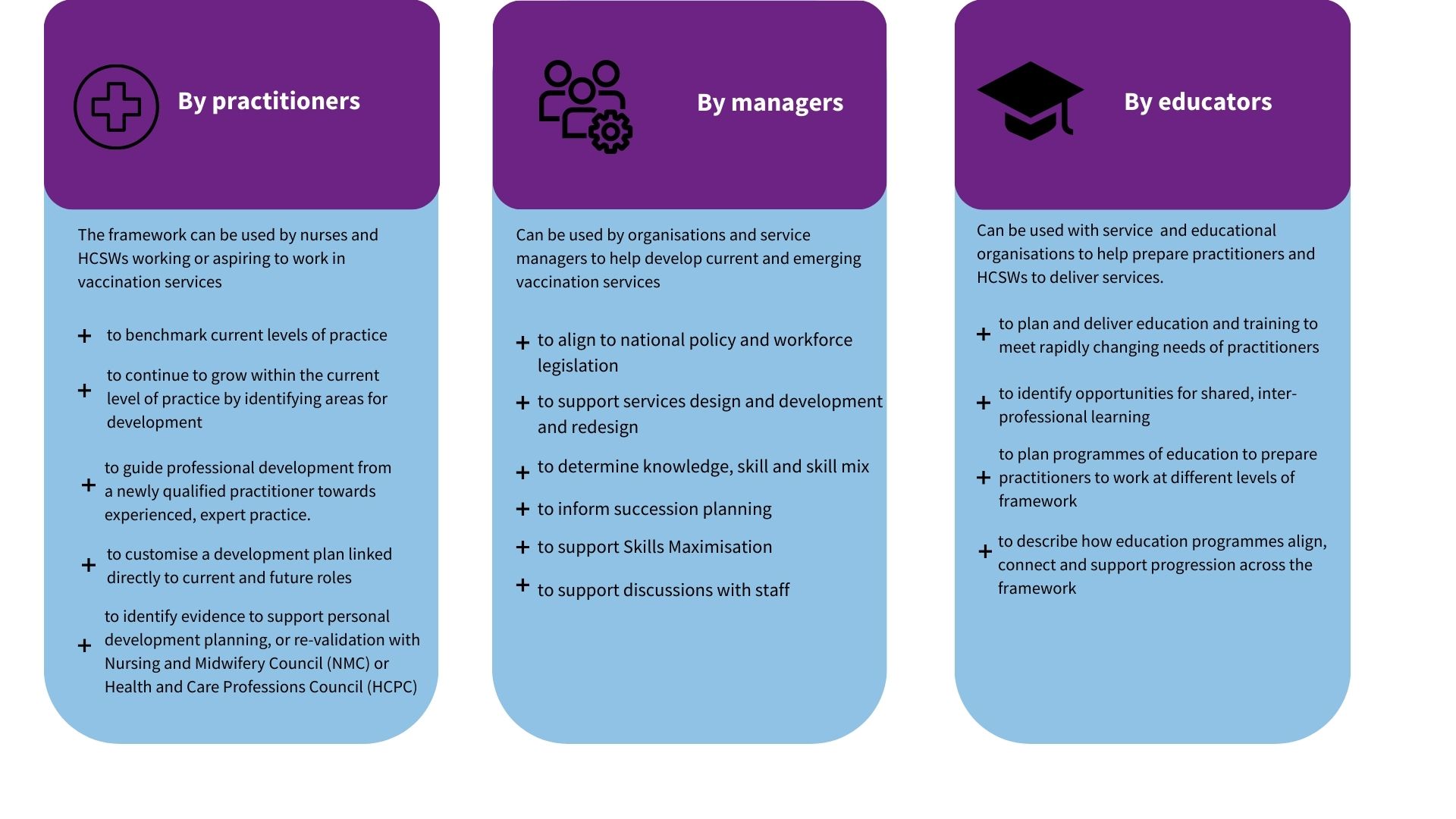
The framework is designed for use by practitioners, managers and educators. Practitioners can use it in a variety of ways, including to create a personalised development plan that aligns directly with their current role and prepares them for future responsibilities.
How to find what you need in this Framework
This Development Framework is organised so users can quickly navigate to the information most relevant to their role. Content is structured by career level (3 to 7), with each level describing the role, responsibilities, required qualifications, and expected knowledge, skills and behaviours (KSBs). Each level also includes both core KSBs, drawn from the NMAHP Development Framework, and specialist vaccinators’ KSBs, all in one place to avoid cross‑referencing multiple documents.
To find the information you need, begin by selecting the career level that best matches your current role or the role you are working toward. Each level includes clearly marked sections grouped under the four pillars of practice, helping you understand expectations for clinical practice, leadership, facilitating learning and service improvement / evidence, research and development.
You can then explore the specialist vaccinators' content, which outlines additional requirements specific to vaccination practice, such as safe administration, cold chain‑chain responsibilities, digital systems, consent, and inclusive practice.
Users can scroll through the full framework or jump directly to different levels or pillars using the navigation menu. As each level builds on the one before, practitioners and managers can easily review progression pathways or compare expectations across levels.
Recording learning and development
A recommended option is using the Turas Professional Portfolio, which is available to all nurses, allied health professionals and HCSWs in Scotland including the NHS, social care, voluntary and independent sectors. This can be used to record evidence of learning for personal development, regulation, appraisal, and career progression.
Go to Turas and log in / register and add the portfolio application
More information on Turas Professional Portfolio is available:
- Nursing and Midwifery Professional Portfolio
- AHP Professional Portfolio
- Professional Portfolio (Recognition of Prior Learning) for HCSWs
A basic reflective template is provided within the framework to support healthcare practitioners to assess their knowledge and skills in Appendix 2.